
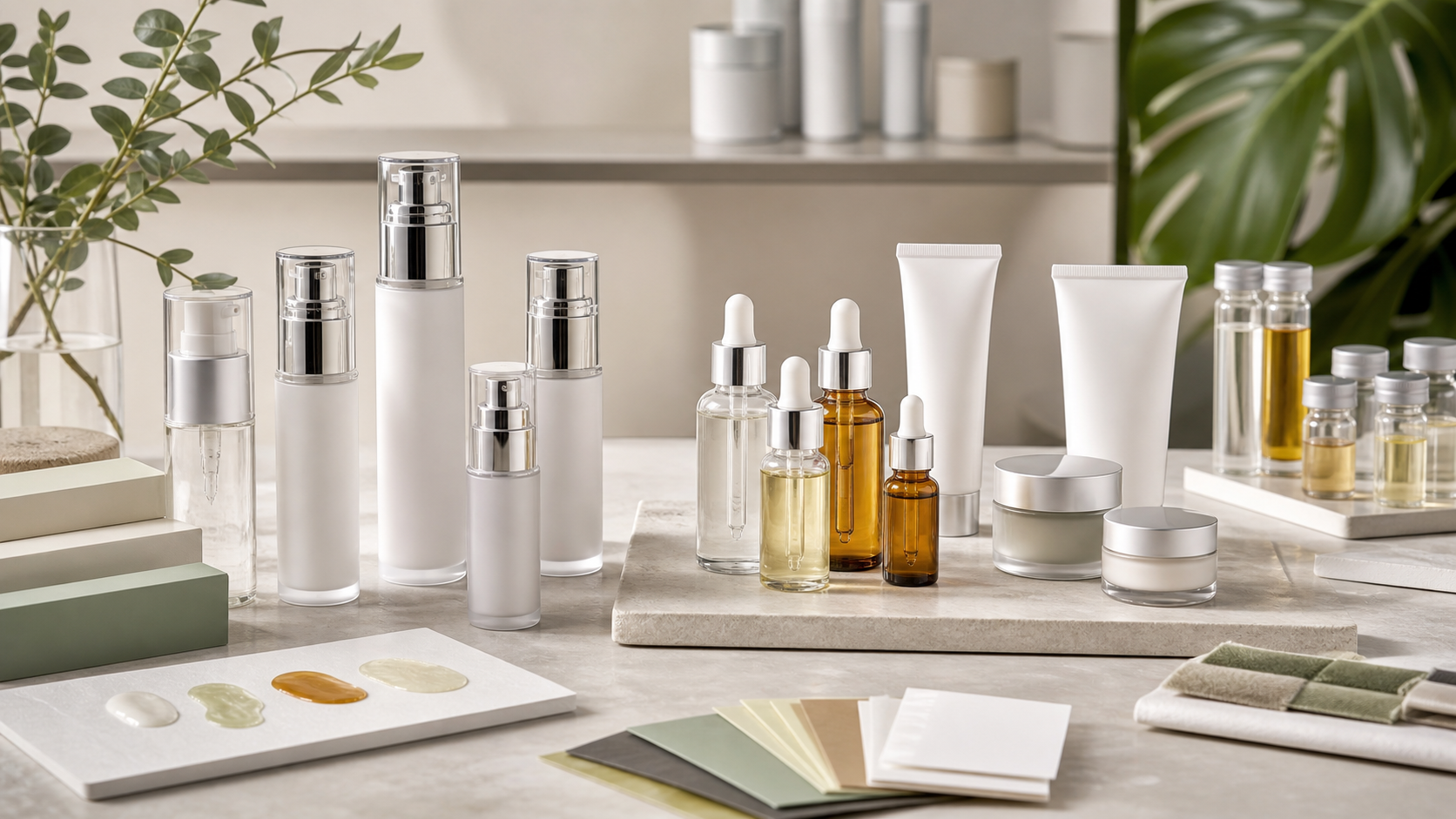
Airless Pump vs Dropper Bottle for Serum Packaging: How Private Label Brands Should Choose
Private label serum packaging is more than a style choice. The bottle you choose can affect formula protection, filling compatibility, shipping risk, user experience, MOQ, and the way customers understand your brand. For private label serum projects, two of the most common options are airless pump bottles and dropper bottles.
Both can work well, but they solve different problems. The right choice depends on the formula, target price, brand positioning, and launch quantity.
What airless pump packaging does well
An airless pump bottle helps reduce air exposure during use. It can be a strong choice for formulas where protection, hygiene perception, and controlled dispensing are important. It also gives a clean, premium look that works well for clinical-inspired skincare, anti-aging lines, and higher-positioned serums.
However, airless packaging usually costs more than a simple dropper bottle. It may also have higher MOQ and requires compatibility testing with the formula’s viscosity and filling behavior. A formula that is too thick, too runny, or contains particles may not dispense well.
What dropper bottles do well
Dropper bottles are familiar to skincare consumers and work especially well for facial oils, watery serums, and products where the user expects a measured drop-by-drop application. Glass droppers can create a premium visual impression, and amber glass can support a more apothecary or natural positioning.
The trade-off is that droppers expose the product to more air during use and may be less ideal for some sensitive formulas. They also create potential user issues: droppers can leak if not matched correctly, glass adds shipping weight, and pipette performance depends on viscosity.
Compare by formula type
| Formula type | Airless pump | Dropper bottle |
| Light water-based serum | Good if pump output is tested | Good, familiar user experience |
| Facial oil | Possible but less common | Often a strong fit |
| Creamy serum | Often better if viscosity is compatible | May be difficult to pick up |
| Sensitive active formula | Can offer better protection | Needs careful formula and packaging review |
| Serum with particles | May clog pump | May also clog pipette; test required |
Compare by brand positioning
Airless pumps often communicate clean, modern, and professional skincare. A private label skincare manufacturer can help judge whether that packaging matches the formula and target price. They are a good match for products positioned around stability, precision, and premium daily use. Dropper bottles communicate classic serum, natural oil, or ingredient-led skincare. They can work well for brands that want a transparent, botanical, or apothecary feel.
Do not choose packaging only because it looks good in a mockup. Ask whether it matches your retail price, shipping method, formula behavior, and customer expectations.
Compare by MOQ and cost
Airless pumps can have higher packaging cost and higher MOQ, especially if you require a custom color, special actuator, metallic finish, or custom carton. Dropper bottles may be more flexible when using stock glass and label printing, but costs can still rise with decoration, coating, custom caps, or protective packaging.When comparing quotes, ask the custom face serum manufacturer to separate packaging MOQ, filling MOQ, printing MOQ, and carton MOQ. This makes the real launch budget easier to understand.
What to test before confirming packaging
- Dispensing performance: does the pump or dropper deliver the right amount?
- Viscosity compatibility: does the formula flow properly?
- Leakage risk: does the package survive shipping and handling tests?
- Formula compatibility: does the product interact with the bottle, pump, gasket, or pipette?
- User experience: does the packaging feel right for the product price and channel?
- Artwork fit: does the bottle shape allow a readable label and compliant information?
Practical recommendation
Choose an airless pump when your serum needs a cleaner premium dispensing experience, better air-exposure control, or a clinical-inspired brand image. Choose a dropper bottle when your formula is oil-based or fluid, your brand leans natural or ingredient-led, or you want a familiar serum format with flexible decoration options.The safest route is to test both packaging options with your actual formula before committing. A good cosmetic OEM/ODM partner can help you compare sample packaging, filling performance, MOQ, decoration options, and cost before production. If you are unsure, ask about serum packaging options before confirming samples.
FAQ Section
Is airless pump packaging always better for serum?
No. It can be better for some formulas, but dropper bottles may be better for oils, very fluid serums, or certain brand styles. Compatibility testing is more important than a general rule.
Are dropper bottles cheaper than airless pumps?
Often, but not always. Decoration, glass weight, cap type, coating, carton, and MOQ can change the final cost.
Can I use the same formula in both packaging types?
Sometimes, but it should be tested. Viscosity, dispensing, leakage, and compatibility can differ between airless pumps and droppers.
| Ready to plan your private label skincare line? |
| Send us your product idea, target market, expected quantity, formula direction and packaging preference. Our OEM/ODM team can help you review the project, suggest a practical launch route, and prepare a quotation based on your MOQ and sample needs. |